
Ayuda International · Our goals
Our goal is to bring the Great Green Macaw home to Bocas del Toro, Panama, by 2030. To get there, we are planting the forest it needs, one almendro tree at a time.
Our goals
The Great Green Macaw depends on the almendro, the mountain almond tree, for food and nesting. As the almendros disappeared from Bocas del Toro, so did the macaws. The Macaw Project restores the habitat first and then the birds, with a breeding aviary at Dolphin Bay that will be the operational heart of the project, built with the partners who have brought macaws back in Costa Rica, led by Ara Manzanillo (Asociación El Proyecto Ara) in Manzanillo, Limón, which has returned about 120 Great Green Macaws to the wild since 2010.
A wonderful organization
Just across the border in Manzanillo, Limón, Ara Manzanillo (Asociación El Proyecto Ara) has spent more than fifteen years proving that the Great Green Macaw can come back. Through soft release reintroduction, support for wild breeding, reforestation and community education, they have returned about 120 Great Green Macaws to the wild. Costa Rica has named their work a project of national public interest.
Their experience is the road map for The Macaw Project. In 2026 Rotaractor Vaill D’Angelo Balaban, who lives in Costa Rica, became our liaison to Ara Manzanillo and to the Rotary clubs of Costa Rica, so the two programs can learn from each other as we prepare to bring the macaw home to Bocas del Toro.
The Mountain Almond
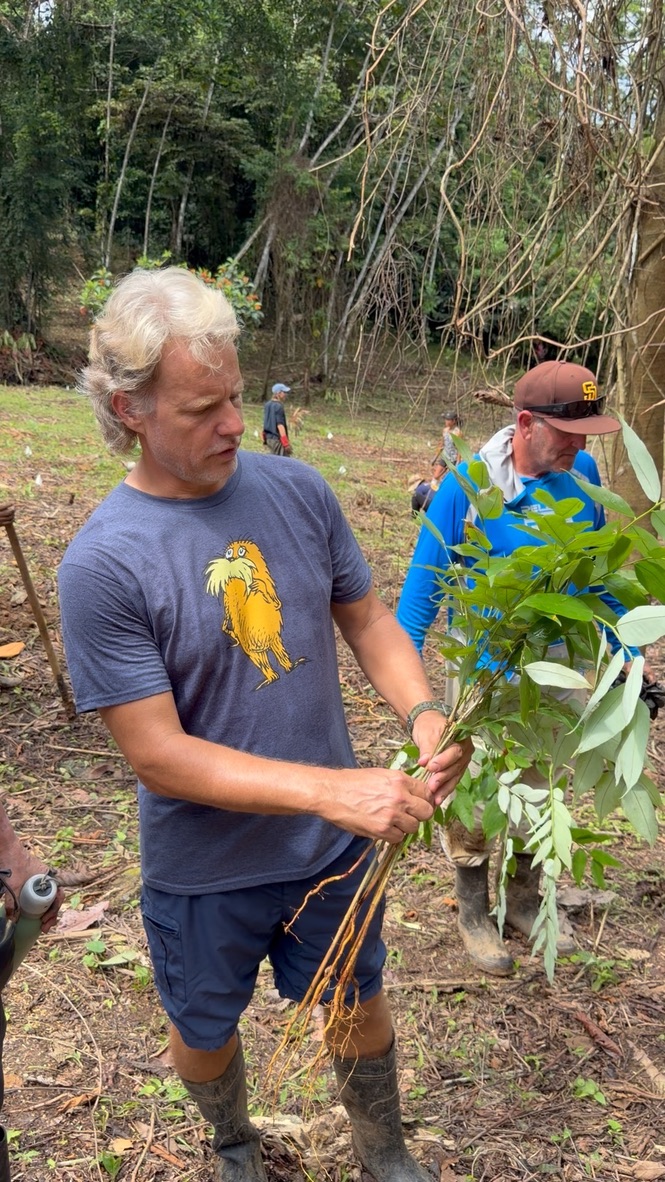
The Mountain Almond, or almendro de montaña (Dipteryx panamensis), is the single most important tree in the Great Green Macaw’s world. Old almendros that have lost branches form the hollows that are almost the only places the macaw will nest in the wild, and their rich, oily seeds are a keystone food for the macaw and thousands of other species.
The almendro is also one of the most prized hardwoods in Central America. As logging cut the almendros down across Panama and Costa Rica, the macaws lost their homes and their food. Fewer than 1,000 adult Great Green Macaws remain in the wild, and in Bocas del Toro both the trees and the birds disappeared. The answer is simple, even if it takes patience: plant the trees, and the birds will have a home to return to.
In 2020, when COVID stranded Steve Bender on Isla Colón, he ran emergency supplies by small boat to cut off island families. Rather than run the boat home empty, he carried almendro saplings back and delivered them to planting sites across the archipelago. Those first trees, planted over about 18 months in 2020 and 2021, should begin to bear fruit around 2028, just in time to welcome the first macaws home by 2030. Today more than 15,000 almendros have been planted.
The story of our trees
In 2020, when COVID closed the airports and stranded Steve Bender in Bocas del Toro, he did not sit still. With Brian Wilcox of Dolphin Bay Hideaway he began planting almendro trees, marking each one with a flag and following a simple planting guide, tree 1 to tree 100. The goal he wrote down in March 2021 was ambitious: plant tens of thousands of trees over ten years.
Partners include Tropical Arts, Wild Bocas, the World Parrot Trust, Rotary clubs from around the world and the many volunteers who have come to Bocas to plant with us.
Growing Green Leaders
The most important thing we plant is not a tree. It is the young person who plants it. Our programs give students, Interactors and Rotaractors real work to lead, and they come home as green leaders. Growing Green Leaders, a six month youth climate challenge for the 2026 to 2027 school year, gives these young people a home to showcase their projects, ending with an Earth Day showcase on April 22, 2027.
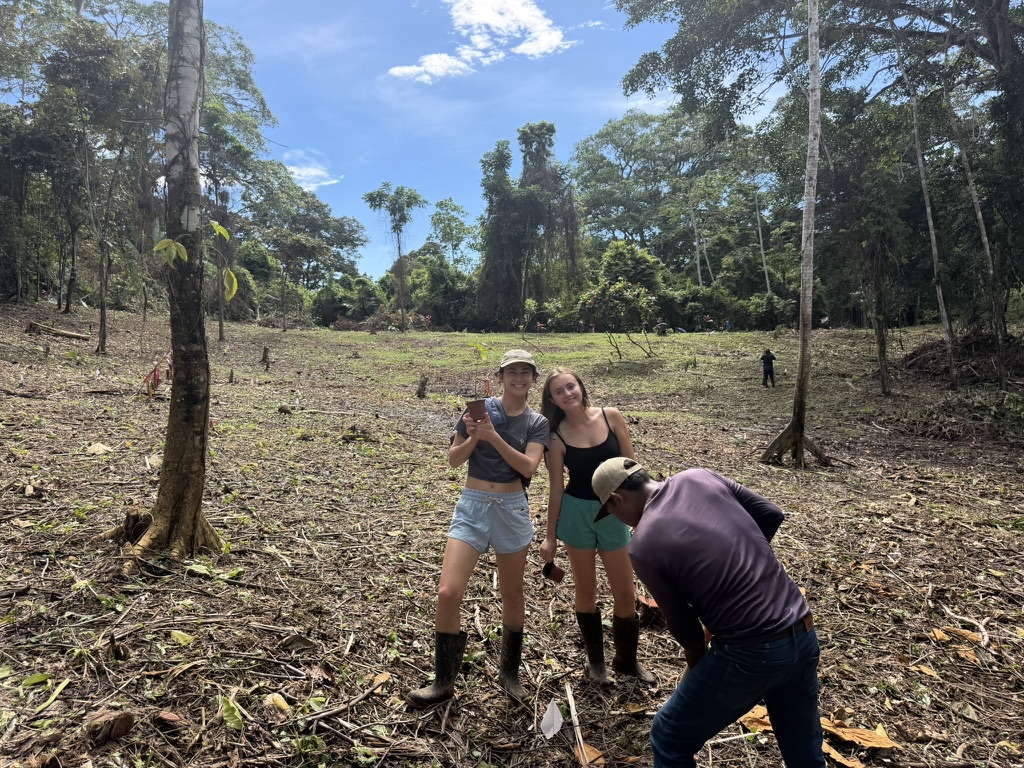
They follow a proud line of Ayuda Rotaractors, from Kaity Zech and Jennifer Stone, who started the Oral Hygiene Initiative in Mexico, to the Rotaractors who built Rotary Reefs in Bocas del Toro in 2021.
Dentists, hygienists, dental students and helpers of every kind are welcome. Tell us where you would like to serve and we will send you the clinic calendar.